Related Posts Plugin for WordPress, Blogger...

Showing posts with label Weird Plants and Fruits. Show all posts

Kiwano Melon


posted by Di-G on

No comments


Kiwano Melon

★ Kiwano Melon is native to South Africa, but cultivated in Australia and New Zealand .

★ For many years this fruit was known more as a decorative fruit rather than a fruit that was good to eat.

Romanesco


posted by Di-G on

4 comments


Romanesco

★ Romanesco or Broccoli Romanesco is a member of the cauliflower family and has a similar taste to cauliflower. 

★ Romanesco was 1st documented in Italy (as broccolo romanesco) in the 16 th century. Isn’t it too beautiful to be eaten ? :p

Buddha's Hand


posted by Di-G on

No comments

Buddha's Hand

★ Buddha's hand or Buddha's hand citron is a very strong scented, odd looking citrus fruit. 

★ The zest alone can perfume a room. its long yellow "fingers" can number from five to 20 and it has no juice or pulp.

Trees that explode !


posted by Di-G on

No comments

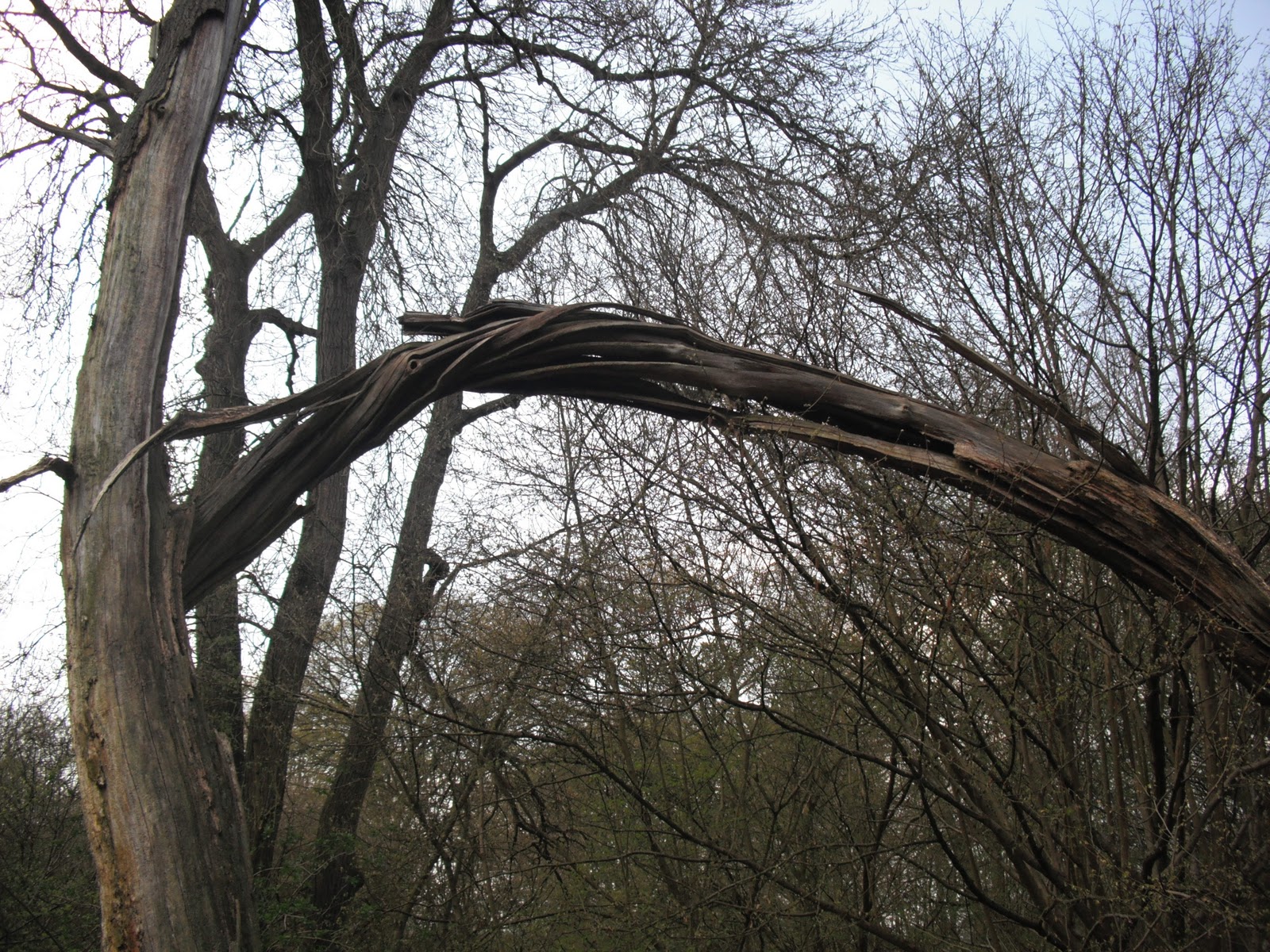
A tree trunk that exploded after being hit by lightning

Exploding Trees

1- Things like extremely cold temperatures will cause trees to explode under certain circumstances! 

2- The explosions can actually be caused by three different elements: cold, fire, and lightning. 

3- It is also caused by stresses in the tree trunks.

4- For example, Maple trees explode when their sap freezes and it’s said to sound like a gunshot. 

5- The Sioux and the Cree Native Americans call the first new moon of the year as the “Moon of the cold exploding trees.” 

6- Some trees, like the eucalyptus native to Australia are highly flammable and explode during bush fires.

▬▬▬▬▬▬▬▬▬▬▬▬
► An Informative Page ◄
▬▬▬▬▬▬▬▬▬▬▬▬

Largest seed in the world !


posted by Di-G on

No comments


Seed of "coco de mer" —Largest seed in the world !

★ The “coco fesse” (the fruit) comes from the palm tree Coco de mer.

★ It will be found only on Praslin and Curieuse islands.

★ The fruit also called double coconut, sea coconut, Seychelles nut, contains the largest seed in the plant kingdom.

★ It was believed that the Seychelles nut was once a drift seed or a sea bean that was dispersed by the sea.

★ It is now known that the seed is too heavy to float, only rotted out nuts can be found on the surface of the sea.

★ The seed of coco de mer can weigh as much as 20 kilograms !

▬▬▬▬▬▬▬▬▬▬▬▬
► An Informative Page ◄
▬▬▬▬▬▬▬▬▬▬▬▬

Corpse flower


posted by Di-G on

No comments


★ Thousands of people are flocking to the northern Swiss city of Basel to see a giant, stinky flower bloom for the first time. The amorphophallus titanum - known as corpse flower because it exudes a smell of rotting flesh - is the first to blossom in Switzerland in 75 years.


★ The Basel Botanical Gardens expects the 6.6ft (2m) plant to attract 10,000 people whilst in bloom. Worldwide, there have been only 134 recorded blooms from artificial cultivation, according to AP news agency.

★ The flower first began to poke out of the soil in March, and in the past few days it had been growing at about six centimetres a day, according to Swissinfo news website.


★ Its mother plant last bloomed in the Frankfurt Palm Garden in 1992. Originally native to the tropical rainforests on the Indonesian island of Sumatra, the plant requires a humid climate to grow and rarely blossoms, even in the wild.The flower's smell, said to be a cross between burnt sugar and rotting flesh, is designed to attract insects for pollination.

▬▬▬▬▬▬▬▬▬▬▬▬
▬▬▬▬▬▬▬▬▬▬▬▬

Tilted trees


posted by Di-G on

No comments


In a tiny corner of western Poland, in Gryfino (not far from Szczecin) a remote forest of about 400 pine trees grow with a 90 degree bend at the base of their trunks – all bent northward.


It turns out that no one really knows exactly what caused it. There are, however, a few theories:

1) The main theory seems to suggest that this is the result of human interference. It is believed that this is a tree farm and the trees were forced to grow horizontally in their youth to make a carpenters life easier. The curved shape can be induced by laying a heavy object over a young tree stem. Phototropism will cause the stem beyond the heavy object to grow toward the sky, while the growing stem beneath and behind the heavy object will develop what is called morphogenetic compression wood - which ultimately makes the curve in the stem permanent.

The problem with this theory is there is no evidence of a carpenter nearby and as the trees are relatively young (90 years) you would think someone would local would have some insight.

2) The other theory suggests that the curved formation is simply a result of heavy snow load combined with a long spring melt. The trees become photosynthentically active as the angle of the sun increases during spring. With a snow load still on the stem during this period, compression wood forms as the trees grow; resulting in a permanent bend.

Again, another problem comes from this theory; why did snow effect just these 400 trees, rather than the whole pine forest?

3) A third expalnation could be soil creep; as colder temperatures pervade the area, the moisture in the soil freezes and expands, displacing the soil and anything not held fast in it (ie. saplings), then during the warmer part of the day, thaws and retracts. Over days, tiny saplings can be moved to angles ranging from just slightly off 90° to laying flat against the ground as if they had fallen. The saplings prefer very much to remain vertical, as their ability to be able to catch sunlight to keep photosynthesizing is dependent on it, so it will actually bend itself towards the sunlight, much like a sunflower turning its 'head' to face the sun. The result, these curved trunks of trees until they are old enough to grow straight up, and not be affected by soil creep. This phenomenon is most prevalent on hilly terrain, as the steepness of the slope causes for more drastic soil creep.

Once again; this theory falls short; the area is not particularly hilly, especially not to the extent of causing such a dramatic curvature.

Is this one of life’s mysteries? What is your hypothesis?

▬▬▬▬▬▬▬▬▬▬▬▬
► An Informative Page ◄
▬▬▬▬▬▬▬▬▬▬▬▬

Baseball plant


posted by Di-G on

No comments


★ Euphorbia obesa or baseball plant is native to South Africa .

★ It can grow to 5 inches.It is a single-stemmed, unbranched, firm-bodied plant.

★ The stem is usually 8-angled and grooved.

★ Over-collecting by collectors and plant exporters almost resulted in the plant becoming extinct in the wild.

★ Today it is protected by national (Nature Conservation) and international (CITES) legislation.


▬▬▬▬▬▬▬▬▬▬▬▬
► An Informative Page ◄
▬▬▬▬▬▬▬▬▬▬▬▬